


In the early 2000s, promoting your events business through a social media influencer was inconceivable.
Sure, social platforms existed at the time and people engaged in social media marketing. But the marketing tactic wasn’t as commonplace as it is today. Now, companies in almost all industries have budgets dedicated to the practice.
Considering how effective influencer marketing has proven to be, it’s not hard to see why. In fact, over 60% of marketers believe influencer-generated content performs better than branded content.
If you want more reach for your event management business, consider using the five influencer marketing strategies we reveal in this article.
What is Influencer Marketing?
An influencer marketing campaign involves promoting your brand through an influencer.
An influencer is anyone considered influential, i.e., someone who holds sway over a large audience. Think of social media influencers like Addison Raee (below).
Influencers are worth partnering with due to their large followings. They’re trusted by millions, having built their reputation on platforms like:
- TikTok
- YouTube
- Twitter;
- Their personal website or podcast; and so on
In most cases, what an influencer says to their audience goes. So if they recommend your brand, it could prove profitable for your business.
The reverse is true as well.
Kylie Jenner’s 2018 tweet (below) is believed to have caused SnapChat’s stock to tank by 7.2%. As a result, the company lost $1.3 billion in value.

Still, how lucrative can influencer marketing be for your business offering event management services?
According to Influencer Marketing Hub’s 2022 Influencer Marketing Benchmark Report, 75% of brand marketers have influencer marketing budgets. Meanwhile, companies make an ROI of $5.78 for every dollar spent on influencer marketing
So if you’re considering adopting an influencer marketing campaign, you’re in good company.
5 Influencer Marketing Strategies for Event Business
Influencer marketing can be a boon for your event business. However, getting positive results with this marketing tactic requires a sound strategy. The five tips below should put your influencer marketing efforts on the path to success.
1. Establish Goals and Objectives
A successful influencer marketing campaign begins with goal-setting.
Always define your desired outcomes before contacting an influencer. As the saying goes, “If you don’t know where you’re going, you might end up somewhere else”.
In other words, goals and objectives act as beacons that will inform the metrics you use to measure your strategy’s success.
The most typical influencer marketing strategy objectives include:
- Raising brand awareness
- Driving engagement with your brand; and
- Reaching new audiences
In fact, two of the above goals rank among the top three reasons companies adopt influencer marketing. See the infographic below for the top ten.

Also, it’s essential you set SMART goals. SMART stands for Specific, Measurable, Achievable, Relevant, and Time-bound.
An example of a SMART goal for your events business would be to “get a 5% increase in event bookings by the end of the first quarter”. It’s a SMART goal because it satisfies all of the above conditions, i.e., it’s specific, measurable, achievable, relevant, and time-bound.
2. Find the Right Influencers
Once you’re clear about your campaign’s objective, the next step is to find the right influencer.
Your chosen influencer should cater to the same target audience as your brand. For example, it wouldn’t make sense for a company to partner with a fashion influencer when it sells sales funnel tools. It wouldn’t make sense for a snack brand to partner with a fitness influencer (unless the snack is supposed to be healthy).
You get the drift.
Making the right choice comes down to how well you know your target audience.
Customer segmentation can help determine whether an influencer is the right person to promote your event management business. If your target persona is engaged women aged 25-30, partner with an influencer in that age and gender bracket with wedding expertise.
Similarly, your business’s customer demographics will determine where you look for influencers and roll out your marketing campaign.
The infographic below shows the demographics for different social media platforms:

Alternatively, you can work with an influencer marketing agency. These agencies have perfected the art of matching brands with the right influencers. Once the agency knows who you’re trying to reach, they can connect your business with an influencer who serves that audience.
3. Qualify Influencers
Qualifying potential influencers is another essential component of an effective influencer marketing strategy. Before cultivating relationships with influencers, ask yourself the following questions:
- Does the influencer’s content align with my business?
- Are the relevant influencers legitimate?
- Has the influencer worked with businesses like mine?
Answering questions one and three is relatively straightforward.
As to question two, a scroll-through of the influencer’s posts should tell you what you need to know. For example, if they have more followers than posts (as the example accounts below show), you may be on a fraudulent account.

In addition, knowing the type of influencer you can afford helps you set a budget and manage expectations. Let’s briefly discuss the most common types of influencers.
Mega Influencers
Mega influencers have over a million followers on their social media accounts. Kylie Jenner (mentioned above) is an example of a mega influencer. At the time of writing, 327 million people follow her Instagram handle.
Naturally, mega influencers aren’t cheap. For example, Kylie Jenner can command as much as $1 million per sponsored post.
Macro Influencers
A social media personality with a following between a million and half a million is considered a macro influencer.
These influencers aren’t as expensive to work with as mega influencers. However, they still expect to be compensated reasonably for introducing their following to your brand.
Micro Influencers
Micro-influencers typically have a following in the range of 10 to 50,000. They typically operate in niche markets and are easier to partner with without breaking the bank.
Nano Influencers
Nano influencers typically have 1000-10,000 followers. Despite their relatively small following, partnerships with nano influencers can still prove profitable.
Let factors like your budget and the size of your event management business determine the category of influencer you partner with.
4. Contact Influencers through Outreach
When you’ve made a list of influencers you’d like to work with, privately reach out to them.
Interacting with their posts organically is a subtle way to get the ball rolling. Become a follower and leave likes and comments on their posts. Your aim at this stage is to build a little familiarity.
Once you’re ready to partner with the influencer, send them a direct message through their social media account. If the influencer included an email in their bio, consider sending them a message there as well.
Avoid sending a generic outreach message. Your message should feel personal. Even though personal DMs and emails take longer to compose, your sincerity is more likely to shine through and win the influencer’s attention.
Also, be clear about your intentions and what the influencer stands to gain by partnering with you. Explain your campaign’s goal and how you think the influencer can help your event management business reach it. On the last point, a little flattery can help but don’t lay it on too thick.
The graphic below shows what to include in your outreach DM or email:

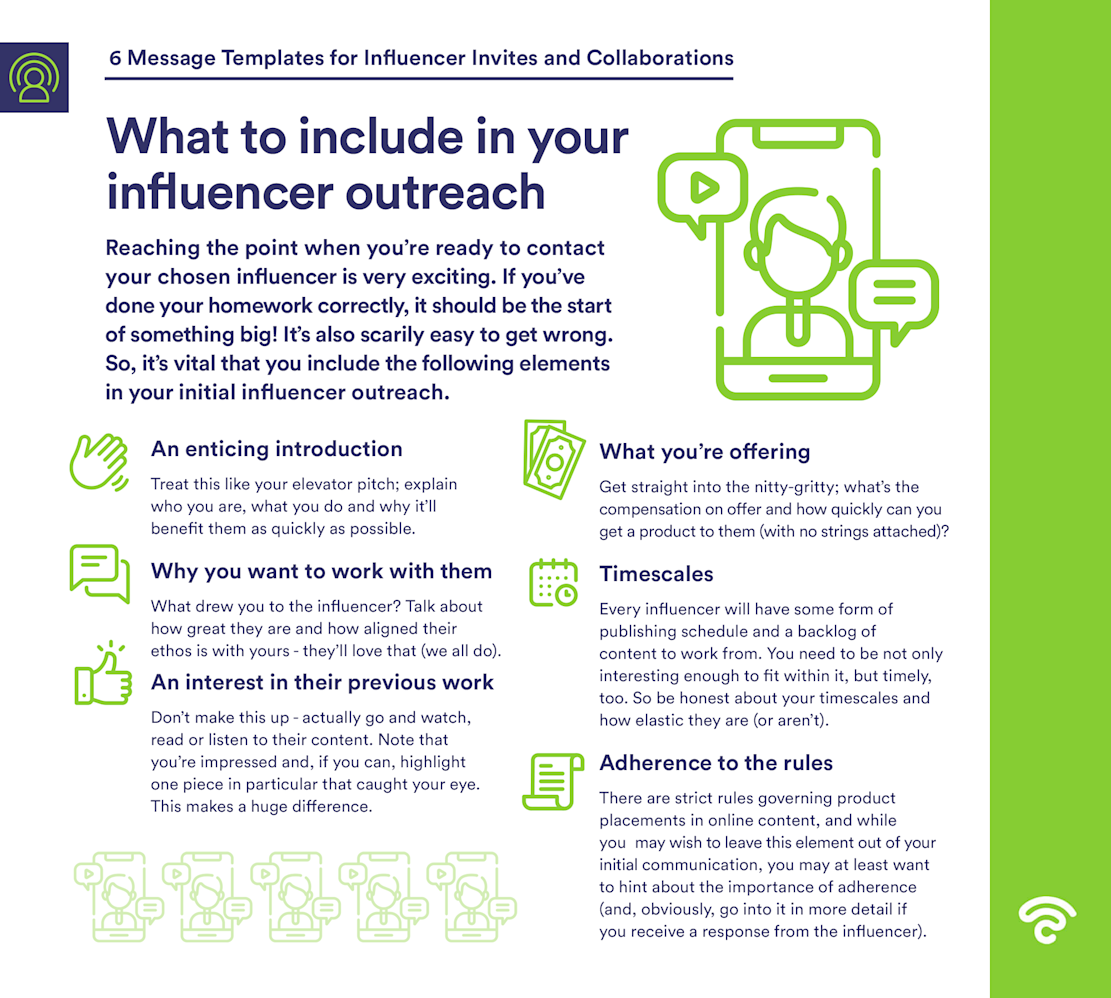
Use the best digital business card to lend your email some credibility. Besides, it’s one way influencers can reach you if they decide to be involved in the project.
5. Measure the Success
Your campaign is running. Congratulations! But your job doesn’t end there. Campaign tracking is the final piece of the influencer marketing strategy puzzle. While vanity metrics like likes, comments, and an increase in follower count can give the illusion of an increased engagement rate. Don’t rely on them.
There are more effective ways to measure success.
You can use UTM parameters, for example. Add these shortcodes to the links you provide to influencers to track how many visitors they send your way.
Platform-specific tools are another accurate means of tracking influencer marketing ROI. For example, Facebook and Instagram have tools for tracking influencer campaigns. These tools provide insight into how effectively a campaign drives engagement with your brand.
The image below shows the detailed data Facebook’s business tool dashboard provides:

Other key performance indicators to watch for include:
- Increased Website Traffic – Google Analytics can show you whether influencer content is effective in boosting website visitors. With the recent shift to GA4, you can monitor the immediate effects on traffic of a single social media post.
- Leads – If your influencer is driving traffic to a landing page, the number of people who opt in is an excellent indicator of your campaign’s success.
Tracking your campaign’s effectiveness is crucial for learning what works and what doesn’t. For example, knowing that a static blog post is just as effective as a reel can guide the partnership’s content strategy.
All this doesn’t mean you should rely only on your chosen influencer to boost your event management business’ reach. There are other strategies you can leverage at the same time for the best results. For instance, why not hire a reputable SaaS SEO agency that can help boost your site’s ranking in search engine results pages? Leverage email marketing as well. It can help you nurture relationships with potential clients.
In Closing
Influencer marketing is an excellent way to increase your event management business’s reach. This article broke down five strategies to achieve the above-mentioned result.
Establishing goals and objectives from the onset puts you on the right track. Meanwhile, finding the right influencers begins with knowing your audience. You’ll also need to qualify influencers so you can set an appropriate budget and manage expectations. Being subtle and sincere when you send an outreach email or DM will win over influencers every time. Finally, tracking your campaign’s results provides essential data for future campaigns.
When you follow the above strategies and integrate event marketing technology into your business, your influencer marketing efforts should pay off.
Discover more from Accelerate the Growth of virtual & hybrid events
Subscribe to get the latest posts sent to your email.